07 THE BENCH
The cover shows what we ship. This page shows the workshop: eight products, where each sits in the four gates, the mechanism inside it, and the one number we're watching next. Parked work stays on the page. A workshop that hides its misses is selling you something.
07.0 THE BOARD
Every idea walks the same bench left to right. It can't skip a gate, and it can be sent back or parked at any of them. The pass bar for each gate is written down before the work starts.
STATUS AS AT SEPTEMBER 2026 · FOUNDER-REPORTED · UPDATED WHEN A GATE IS PASSED, NOT WHEN IT'S PROMISED
07.1 TEND
The problem. Men between 35 and 55 don't fail at fitness for lack of information. They fail alone. A challenge run on a group chat and a spreadsheet works for six weeks, then one missed week becomes a quiet exit.
How it works. A crew signs up together and logs eight small daily ticks. A fair-start score ranks who is improving against their own Day-1 baseline, never who is fittest. Miss a week and you get a comeback card, not a reset to zero. Chat, events and a week planner sit in the same app, so the crew is the product and the fitness is the excuse.
Built in late August from a mate's spreadsheet, scoring engine tested line-for-line against it. The first crew self-served through invite-only signup. Cohort one started 1 September; the dated ledger is on the cover page.
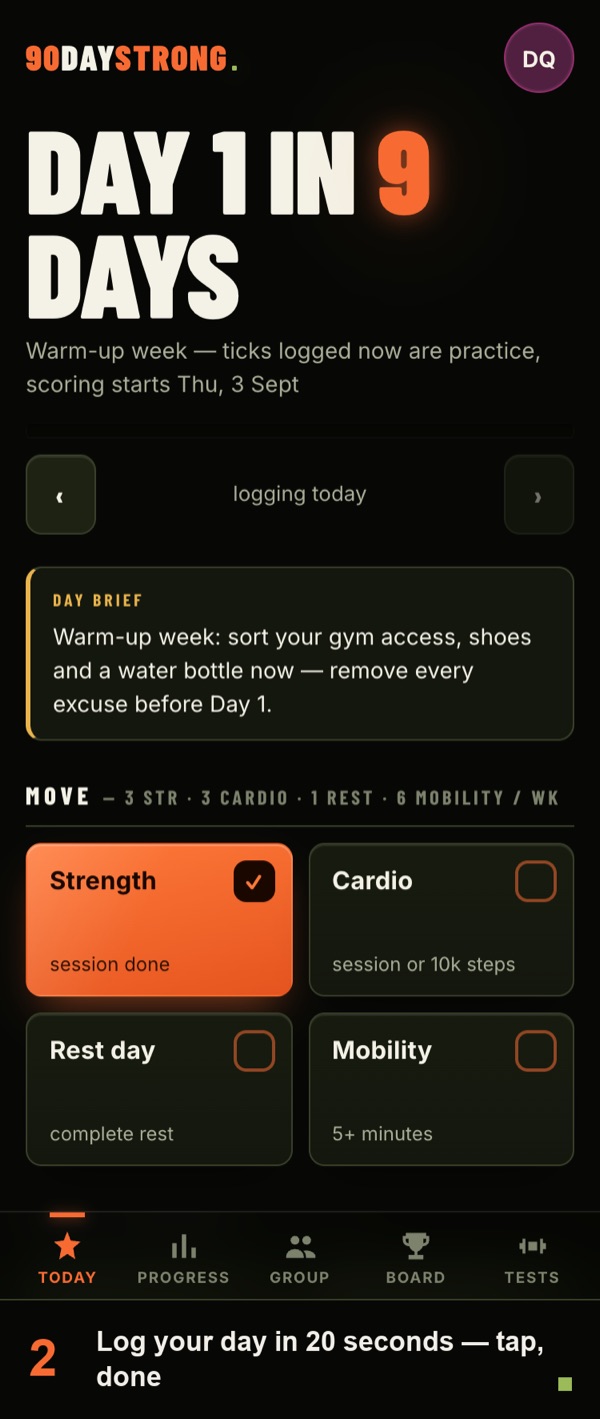
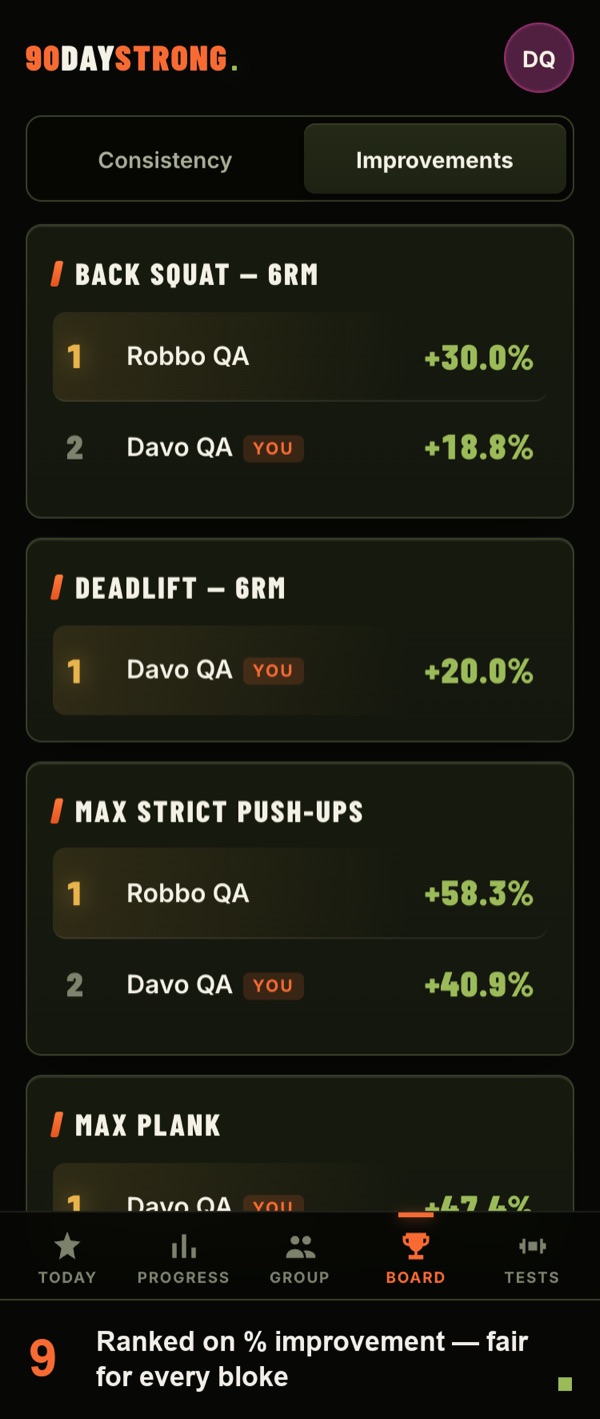
LIVE BUILD · TEST CREW, DEMO NAMES · TODAY AND THE BOARD
07.2 PROVE
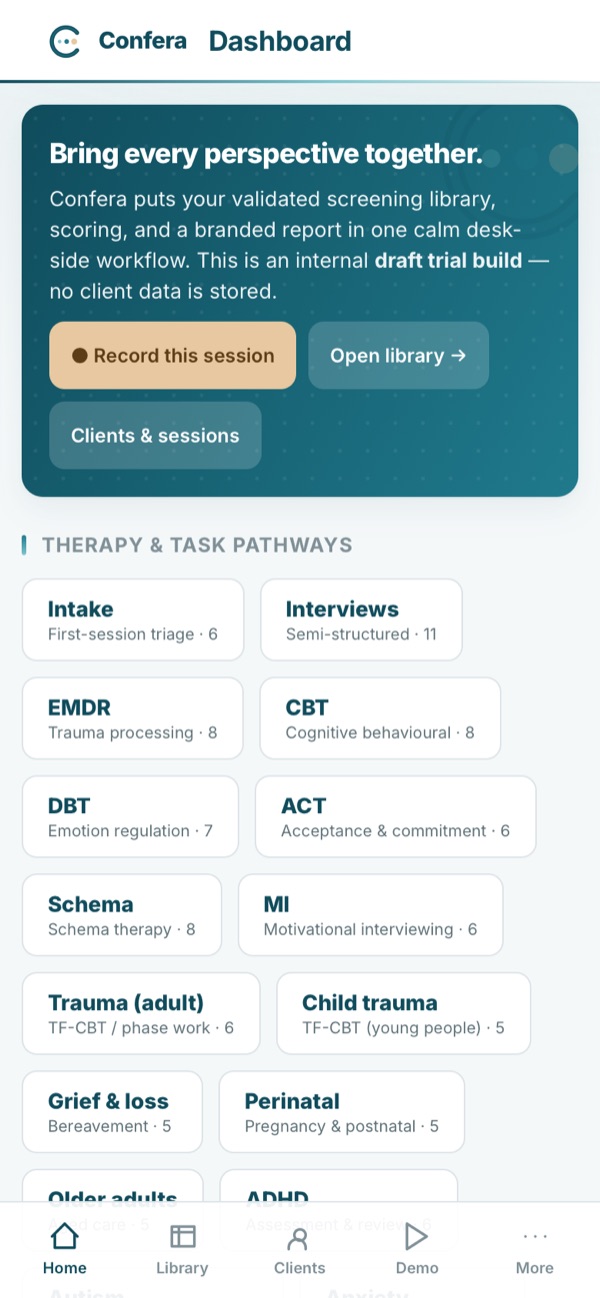
The problem. Clinicians score screening instruments by hand, or pay per client for a portal that stores data they'd rather not hand over. A free trial cap in the middle of a caseload is a real Tuesday-afternoon problem.
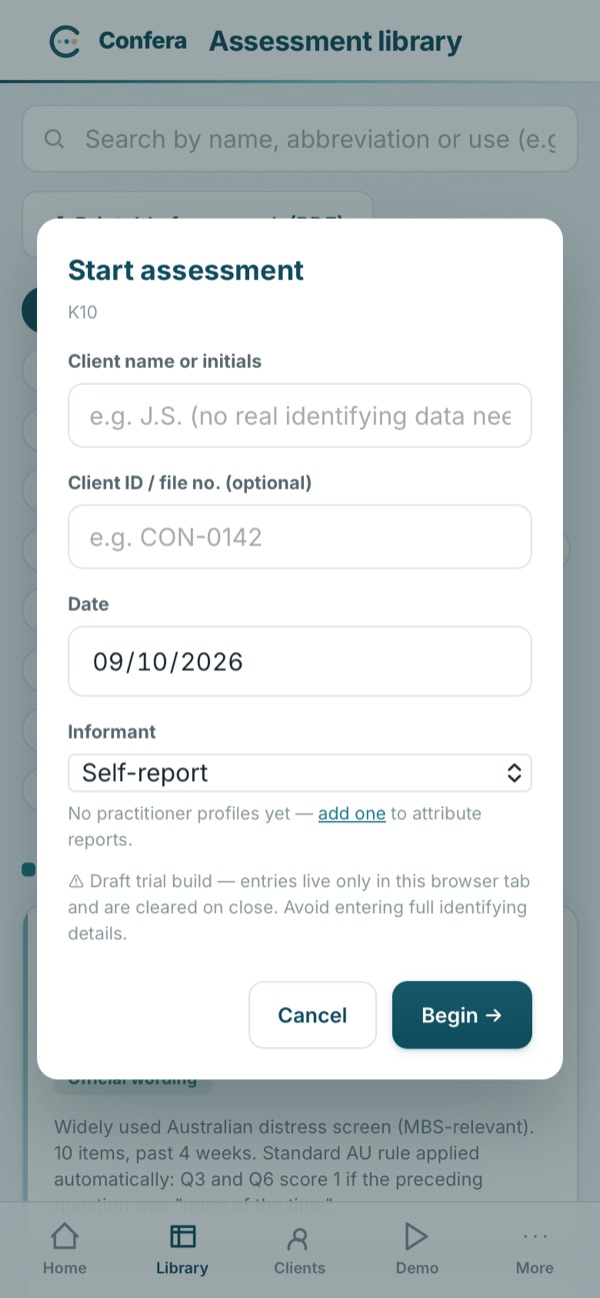
How it works. One self-contained file. Open it, pick an instrument, score it live in the session, get a clean summary and a branded PDF the report can lean on. It stores nothing: in memory only, by design, and it runs with the Wi-Fi off. Only public-domain and openly-licensed instruments are in the cleared set, with official item wording.
Staff trial inside one practice since August. Sixteen instruments cleared for real use; the rest sit in a draft tier and are labelled as such. Multi-informant comparison came straight from trial feedback.


TRIAL BUILD · NO CLIENT DATA EXISTS TO CENSOR · DASHBOARD AND START-ASSESSMENT
07.3 BUILD
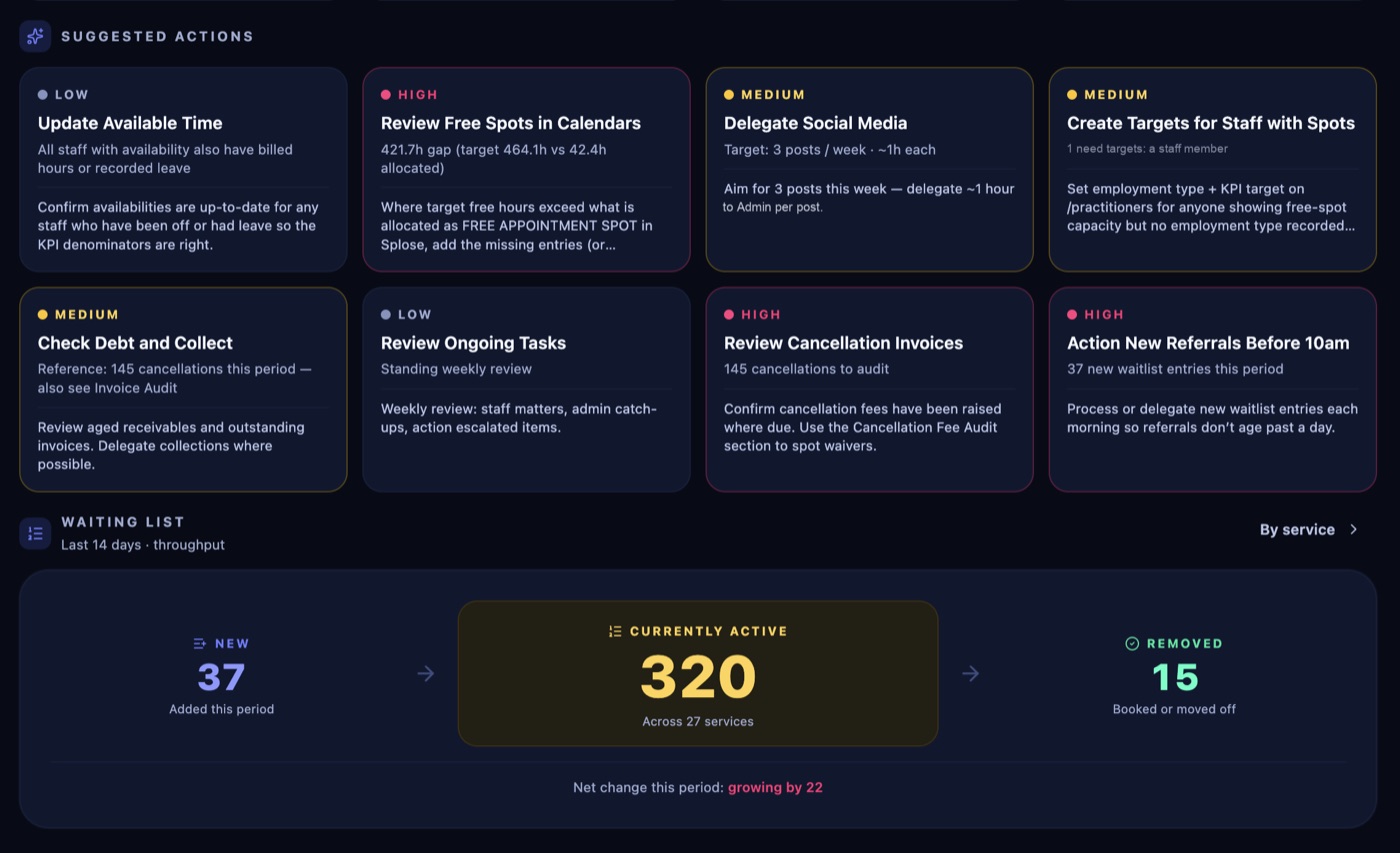
The problem. A practice owner can see last month's revenue and this week's diary, but not the gap between what the team could earn and what the calendar says it will. By the time the gap shows up in the bank, it's a quarter old.
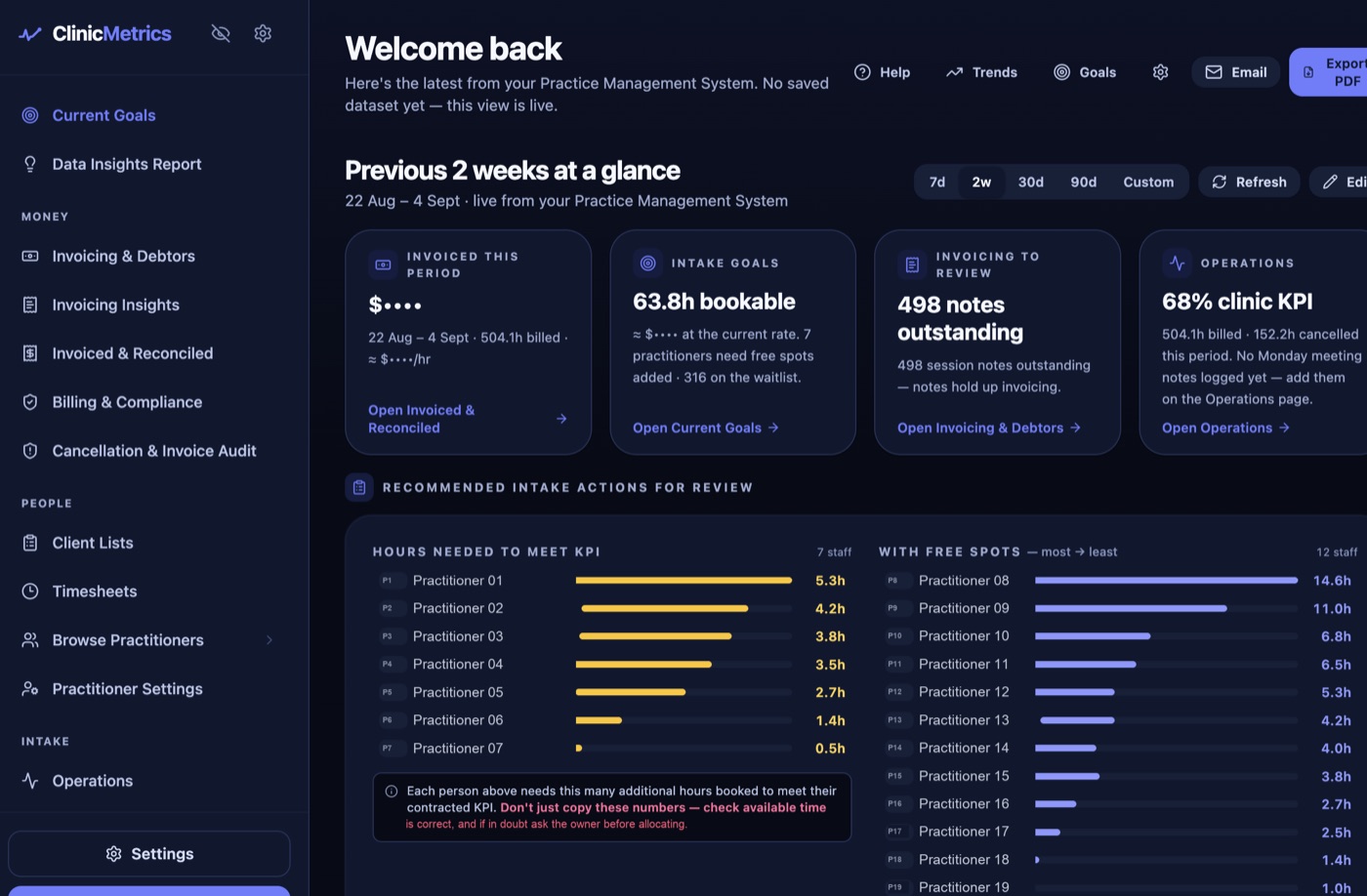
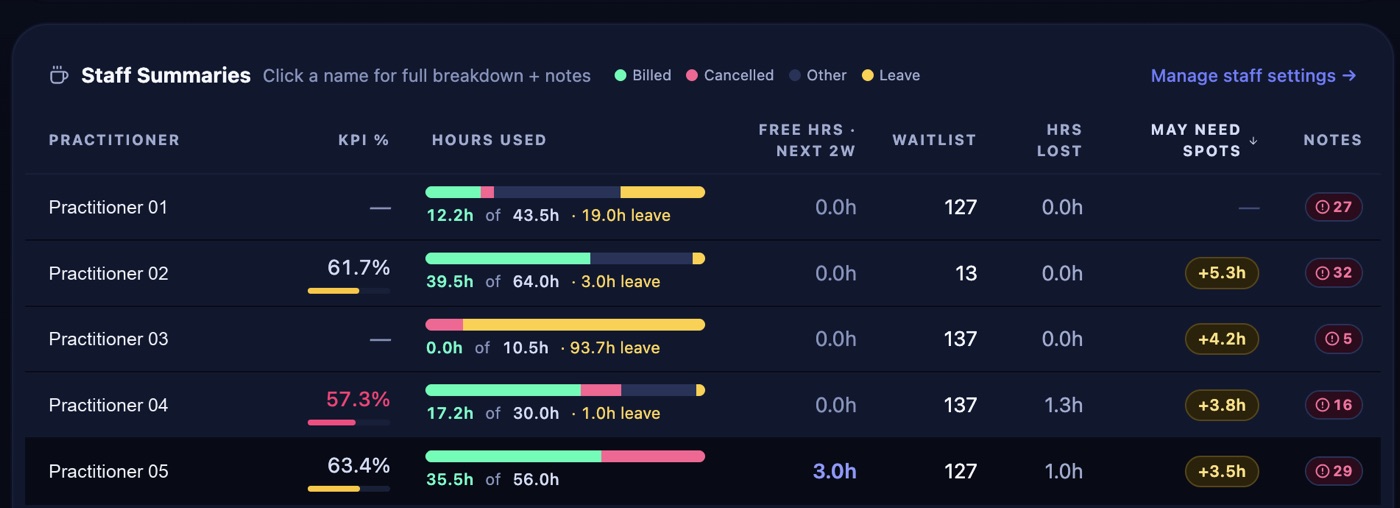
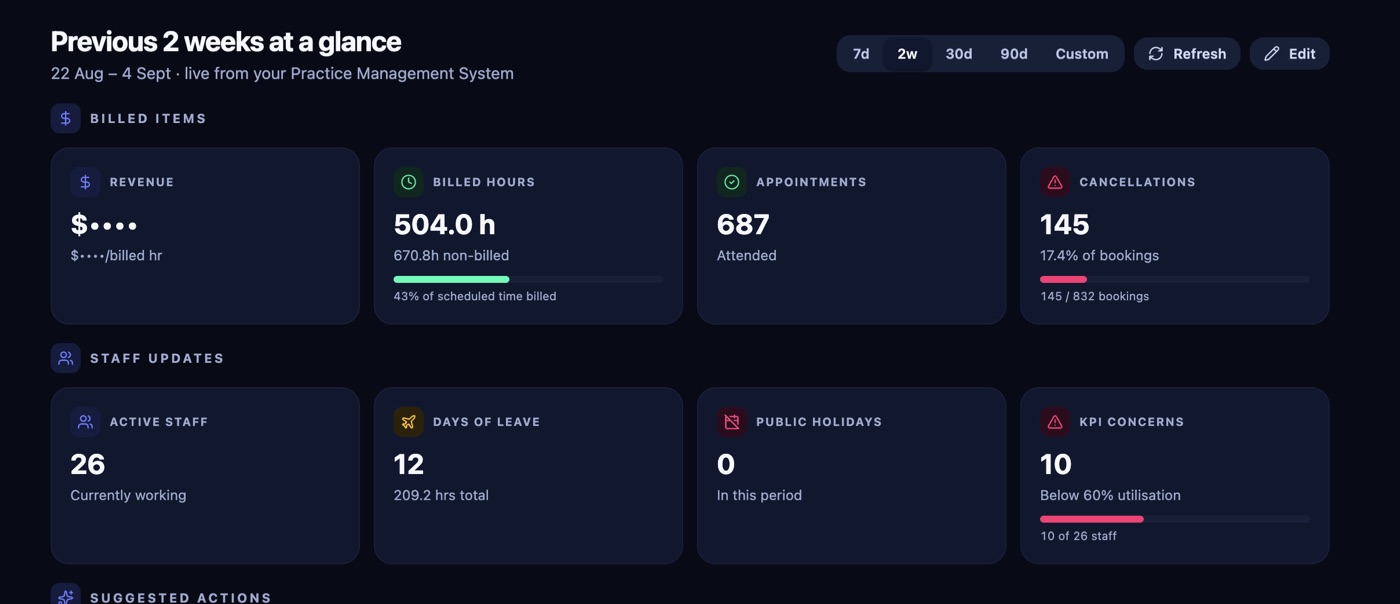
How it works. It reads the booking system and frames three numbers around zero: invoicing efficiency, cashflow efficiency, and an overall rating, where zero means the team is at goal. Every practitioner gets an eight-week timeline. The intake view shows which referral types arrived and whether the free spots got filled. The rule is decisions, not dashboards: it should tell you what to chase on Monday.
Live inside one practice, used fortnightly by the leadership team. Currently reworking the expected-hours definition so part-timers aren't measured against a full-time week. That flag came from the team, which is the point of a live testbed.


LIVE INSTANCE · STAFF NAMES REPLACED, DOLLARS MASKED BY THE APP · DASHBOARD, STAFF, PERIOD, ACTIONS
07.4 BUILD
The problem. A shoebox of cards is worth something, but nobody knows what, and the answer changes with condition and the week. Looking up each card by hand is the job that never gets done.
How it works. Photograph a card. The AI identifies the game, the name, the set and the number, and estimates the condition. You confirm it in one tap, the price comes back from the game's own market, gets converted to dollars and adjusted for condition, and the card lands in a binder that tracks its value over time. No key, no AI: you can still type it in.
Built and working across Pokémon, Magic and Yu-Gi-Oh!, with a nine-year-old co-founder who tests every release harder than any adult. It has never been shipped to a store. That is a decision, not a delay: the next gate is whether strangers want it.
07.5 PROVE
The problem. Firms that live in a calendar know their year is predictable and still don't pre-book it. The gap between what the team could earn and what's actually in the diary has a name in accounting: headroom. Almost nobody measures it.
How it works. The same foresight layer as ClinicMetrics, lifted off the clinic and set over any booking system. Two numbers: what the team could earn versus what's booked, and what share of the client book has its next touch already in the calendar. The intervention is a habit, not a chart: pre-book the predictable work months ahead, then chase the gaps it exposes.
Working title chosen in August. Two firms asked for this unprompted, which is why they're the trial. The rule is concierge before code: take a calendar export, produce the report by hand, ask the price question in the first conversation.
07.6 VALIDATE
The problem. Distress builds for hours before anyone acts on it, and what people carry home shapes their families. Employers with isolated crews already pay for the fallout in missed shifts and early exits. The help that exists arrives as a notification, or not at all.
How it works. A wearable gives an early signal of dysregulation. Loop never diagnoses; it asks. "Does this match?" A yes opens a plan that was matched to the person at baseline: their values, what has worked for them before, how their escalations tend to run. The response is tiered: awareness, a micro-reset, then human connection, including a nudge to a mate that shares nothing but the nudge. The matching engine is the real product; the watch is just the doorbell.
The oldest idea in the workshop and the one most worth getting right. Trial design locked in July: a small real-intake trial, not a slide deck. Beachhead is employer-funded isolated workforces, where the demand came to us first. The consumer version rides the same engine later.
07.7 PARKED
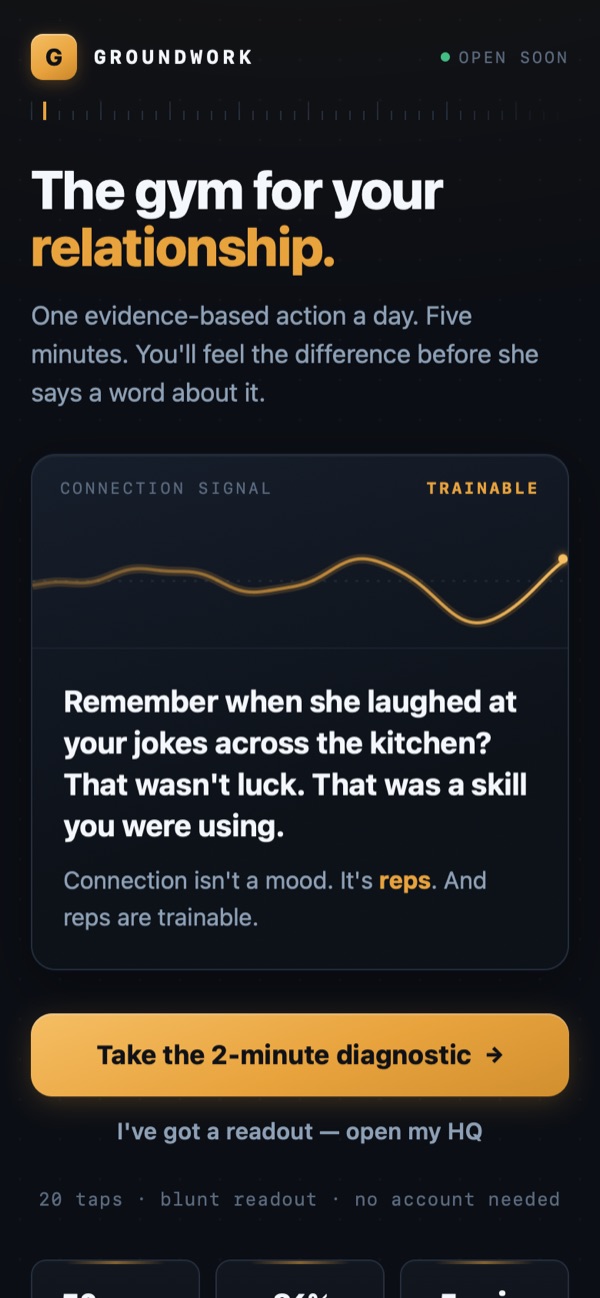
The idea. The gym for your relationship. One small, evidence-based daily action for a man who wants to be a genuinely better partner. Two rules it never breaks: track his behaviour, never her response; identity over transaction.
Why it's parked. The validation pass scored it 17 out of 30 and named the flaw the Pincer. The buyer converts on an outcome, his partner's desire, that the product is ethically and scientifically forbidden to promise. Solo interventions can make him a better partner; they can't guarantee her response, and the moment marketing implies otherwise it becomes the thing it was built to replace. The blueprint was the best the process had seen. It was parked anyway.
The content library and the ethics. An employer-funded relationship-fitness module inside Loop, where the employer pays and nobody is sold an outcome, is the thread still alive. Before any of that, a fake-door test under five hundred dollars decides whether the case reopens.

07.8 PARKED · PRE-VALIDATION
The idea. Built before this workshop existed, on a different AI platform: a life co-pilot you talk to. Chat and voice, habits with goals, scheduled check-ins, a support-network list, and a dashboard that turns patterns the AI notices into charts. Onboarding chooses a focus, from relationships to mental health, and a way of talking.
What's actually valuable. Not the app. The rulebook the AI runs on: five written operating nodes a clinician designed. A persona that validates before it advises and builds rapport over five questions, not one. A guardian that triages distress in three levels with Australian helplines and a firm mode for abusive dynamics. An analyst that listens for attachment style and schema. A visionary that separates goals from values and reframes failure as data. A toolkit of ACT and DBT moves. That layer is portable to any product with a conversation in it.
The code is a prototype: keys in the browser, everything in local storage, the promised session memory never built. And the two questions that decide it haven't been answered by the process yet: mental-health-adjacent liability in a registered-practitioner context, and whether a consumer wellbeing app can be sold at all against the incumbents. It goes through the same Validate gate as everything else, or it stays here.